
For example, if a company car is sold for $7,500 and its book value is $9,000, a loss of $1,500 will be reported. At the end of the accounting year, the balance in each of the accounts for recording operating revenues will be closed in order to start the next accounting year with a zero balance. The current accounting period’s earnings (or net income) will be added to this account and the current period’s dividends will be deducted. Common StockIf a corporation’s common stock has a par value or a stated value, only the par or stated value of the shares issued will be recorded in this account. However, if a corporation’s common stock has neither a par value nor a stated value, the entire amount received by the corporation at the time that the shares were issued will be recorded in this account. Short-term Loans PayableThis account will report the amount of loans which will be due within one year of the date of the balance sheet.

Non-Current Liabilities
- The $13,420 of Wages Expense is the total of the wages used by the company through December 31.
- If a company’s stock is publicly traded, earnings per share must appear on the face of the income statement.
- These three situations illustrate why adjusting entries need to be entered in the accounting software in order to have accurate financial statements.
- Service Revenues is an operating revenue account and will appear at the beginning of the company’s income statement.
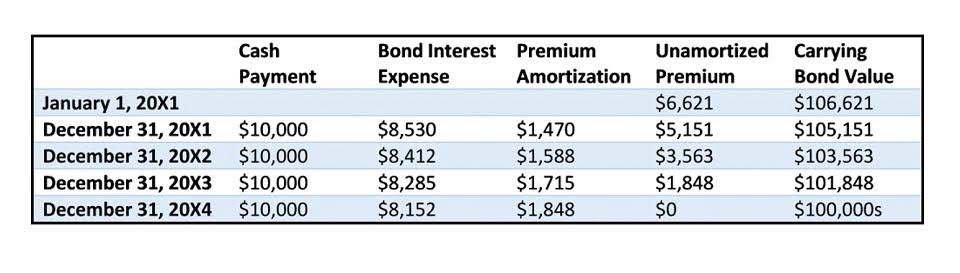
The two accounts involved will be the balance sheet account Allowance for Doubtful Accounts and the income statement account Bad Debts Expense. In business, liabilities are any debts, outstanding payments, loans, mortgages, accounts payable, or anything else your business Online Accounting owes to a bank, suppliers, or another company. In short, liabilities are the opposite of total assets a company owns. The book value of an asset is the amount of cost in its asset account less the accumulated depreciation applicable to the asset. The book value of a company is the amount of owner’s or stockholders’ equity. The book value of bonds payable is the combination of the accounts Bonds Payable and Discount on Bonds Payable or the combination of Bonds Payable and Premium on Bonds Payable.
Double-Entry, Debits and Credits
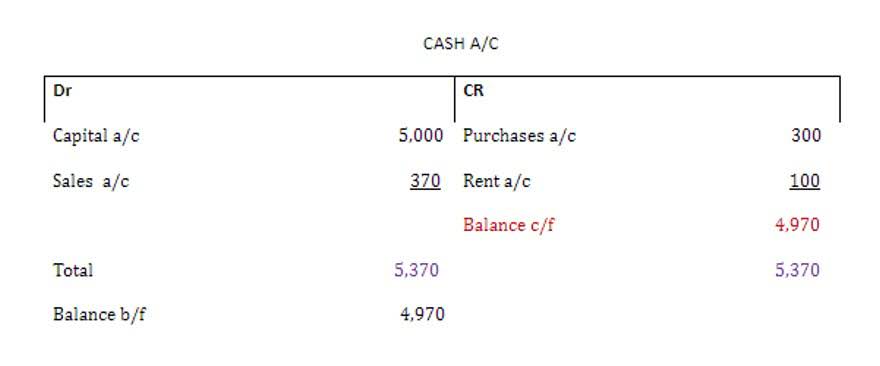
Unlike assets, which you own, and expenses, which generate revenue, liabilities are anything your business owes that has not yet been paid in cash. Accrued Expenses – Since accounting periods rarely fall directly after an expense period, companies often incur expenses but don’t pay them until the next period. This means that debit entries are made on the left side of the T-account which decrease the account balance, while credit entries on the right side will increase the account balance. The ending balance in the contra asset account Accumulated Depreciation – Equipment at the end of the accounting year will carry forward to the next accounting year. The ending balance in Depreciation Expense – Equipment will be closed at the end of the current accounting period and this account will begin the next accounting year with a balance of $0.
Liability: Definition, Types, Example, and Assets vs. Liabilities
The link between the balance sheet and income statement virtual accountant is helpful for bookkeepers and accountants who want some assurance that the amount of net income appearing on the income statement is correct. If you verify the ending balances in the relatively few balance sheet accounts, you can have confidence that the income statement has the proper net income. Hence, you are wise to establish a routine to verify all of the balance sheet amounts. CashCash includes currency, coins, checking account balances, petty cash funds, and customers’ checks that have not yet been deposited. The asset accounts are usually listed first in the company’s chart of accounts and in the general ledger.
It invoices the restaurant for the purchase to streamline the drop-off and make paying easier for the restaurant. These are due for settlement in more than one year, and almost always involve long-term borrowings. For information pertaining to the registration status of 11 Financial, please contact liability accounts the state securities regulators for those states in which 11 Financial maintains a registration filing. If he introduces any additional capital, an entry will be made on the credit side of his capital account.
In turn, we hope that you will become more valuable in your current and future roles. Pension obligations are crucial to understanding a company’s commitment to its employees and the potential strain on future resources. Accurately accounting for pension obligations can be complex and may require actuarial valuations to determine the present value of future obligations. No one likes debt, but it’s an unavoidable part of running a small business. Accountants call the debts you record in your books “liabilities,” and knowing how to find and record them is an important part of bookkeeping and accounting.
- The $9,723.90 would be debited to interest expense, and the same amount would be credited to interest payable.
- It will also reveal what is preventing the financial statements from being distributed sooner.
- Under the accrual method of accounting, Accounts Receivable is debited at the time of a credit sale.
- PayrollAnother source of financial transactions is the company’s payroll.
- If a review of the payments for insurance shows that $600 of the insurance payments is for insurance that will expire after the balance sheet date, then the balance in Prepaid Insurance should be $600.
- Journal entries usually dated the last day of the accounting period to bring the balance sheet and income statement up to date on the accrual basis of accounting.

Today, accountants adopt practices like the use of these columns to keep records that are used on a long-term basis. They are also useful for the management in promoting effective decision-making. A contingency is an existing condition or situation that’s uncertain as to whether it’ll happen or not.
Leave a Reply